Deep Fried Mars Bar – History, Recipe and Calories
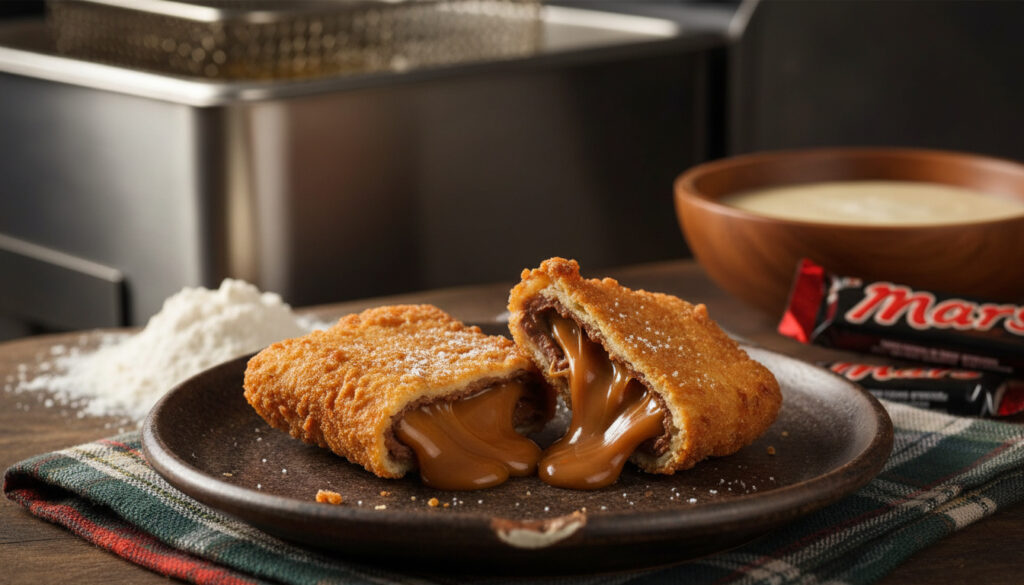
A Mars bar encased in golden batter and submerged in hot oil until the chocolate caramel core melts into molten sweetness. This is the deep fried Mars bar, a Scottish chip shop creation that evolved from local schoolyard dare to global symbol of indulgent excess. Known for its crunchy exterior and gooey center, the treat carries a reputation that far outweighs its modest origins.
Despite its notoriety as a nutritional nightmare, the dish remains a fixture of Scottish culinary folklore. Tourists travel specifically to northeastern chip shops to sample the original, while health surveys continue to document its surprising prevalence across takeaway counters.
What Is a Deep Fried Mars Bar?
Origin
Scottish chip shops (Stonehaven/Banff), 1980s–1992
Key Ingredient
Standard Mars bar coated in fish batter
Calories
500–900 per serving
Cultural Status
Unofficial Scottish icon and media stereotype
Key Facts
- The treat originated as a novelty item in Scottish fish-and-chip shops, not as a traditional recipe
- Carron Fish Bar in Stonehaven claims documented invention in 1992, though rival shops in Banff and Buckie cite earlier 1980s origin
- A single bar contains roughly twice the calories of an unfried Mars bar, with significant fat absorption from the frying process
- Media coverage in August 1995 transformed the local curiosity into an international phenomenon
- Despite health criticisms, a 2004 survey found the item available in 23% of Scottish chip shops
- The dish circulates globally at state fairs and festivals in the United States, Australia, and Canada
- Mars Inc. has never officially endorsed the product, creating tension between the brand and this unauthorized adaptation
At a Glance
| Attribute | Details |
|---|---|
| Calorie Range | 500–900 kcal |
| Origin Location | Stonehaven, Aberdeenshire (primary claim) |
| First Documented | 1992 |
| Primary Venue | Scottish chip shops (fish-and-chip stores) |
| Batter Composition | Flour, eggs, milk (standard fish batter) |
| Frying Medium | Vegetable oil or beef fat |
| Current Availability | ~150 sold weekly at origin shop |
| Health Classification | High sugar, high saturated fat, minimal nutrients |
Where Did the Deep Fried Mars Bar Originate?
The creation emerged from Scotland’s tradition of deep-frying foods, a practice rooted in working-class industrial communities where hot, calorie-dense meals provided fuel for physical labor. According to Wikipedia, multiple locations claim precedence, creating a contested history that remains unresolved decades later.
The Stonehaven Claim
Carron Fish Bar—formerly Haven Chip Bar—in Stonehaven, Aberdeenshire, maintains the most documented origin story. In 1992, schoolboys John Twaddle and Brian McDonald reportedly dared each other to batter and fry their lunch Mars bars. Staff member John Davie accommodated the request, and the result spread through local schools before reaching regional newspapers. Tasting Table notes that this narrative includes specific dates and witnesses, lending it credibility among historians.
Earlier Rival Claims
Competing assertions challenge Stonehaven’s primacy. Tom Cummings at Duncan Street Chip Shop in Banff reportedly fried Mars bars during the 1980s, having copied the technique from Dodie’s Chip Shop in nearby Buckie, where early 1980s service is claimed. Mini Wurm Adventure documents these competing narratives, noting some Glasgow chip shops even cite 1970s origins. No consensus exists because informal experimentation likely occurred simultaneously across multiple locations.
Multiple Scottish chip shops continue asserting invention rights, but no definitive documentation predates the 1992 Stonehaven account. The lack of written records from the 1970s and 1980s leaves these earlier claims anecdotal rather than verified.
How Do You Make a Deep Fried Mars Bar?
Preparation remains conceptually simple though technically hazardous. The process requires precise oil temperature control to prevent scorching the chocolate while cooking the batter through.
Ingredients
- 1 Mars bar (chilled)
- 100g plain flour
- 1 egg
- 150ml milk
- Vegetable oil or beef fat for frying
As detailed by the Glasgow School of English, this batter mirrors standard fish-and-chip shop recipes, creating the characteristic golden crust.
Step-by-Step Instructions
- Chill the Mars bar in the freezer for 30 minutes to prevent complete melting during frying
- Whisk flour, egg, and milk into a smooth batter consistency
- Heat oil to 190°C (375°F) in a deep pan or fryer
- Coat the chilled bar completely in batter, ensuring no chocolate remains exposed
- Submerge in hot oil for 2–3 minutes until golden brown
- Remove with a slotted spoon and drain on paper towels
Tips for Success
Temperature represents the critical variable. Insufficient heat creates soggy, oil-saturated batter, while excessive heat burns the exterior before the interior warms. The chilling step proves essential; room-temperature bars disintegrate upon contact with hot oil. Chip shops typically use beef fat, which adds distinct flavor but introduces trans fats absent in vegetable oil preparations.
Deep frying at home presents significant burn hazards. Water content in chocolate can cause violent oil spattering. Use a thermometer, never leave hot oil unattended, and ensure adequate ventilation. The Glasgow School of English emphasizes professional chip shop preparation as the safer option.
How Many Calories Are in a Deep Fried Mars Bar?
Nutritional content varies by preparation method and batter thickness, but figures consistently indicate a substantial caloric load. A standard Mars bar contains approximately 250 calories; the battered and fried version ranges from 500 to 900 calories according to Wikipedia and Tasting Table.
Nutrition Breakdown
The caloric increase stems primarily from oil absorption in the batter and the frying medium. A 2004 Scottish health survey confirmed the item’s availability but also highlighted its nutritional profile: high in saturated fats, refined sugars, and simple carbohydrates, with negligible protein, fiber, or micronutrients. Frying in beef fat, the traditional method in many Scottish chip shops, adds trans fats that compound cardiovascular concerns.
Health Risks
Since the mid-1990s, medical literature has used the deep fried Mars bar as shorthand for dietary excess. The Mini Wurm Adventure analysis notes that a 2004 Lancet study cited the treat’s prevalence when documenting Scotland’s high-fat diet challenges. Regular consumption correlates with obesity, type 2 diabetes, and cardiovascular disease risk factors.
Compared to seeking sustainable Dark Circles Under Eyes – Causes, Treatments & Prevention through lifestyle adjustments, addressing the health impact of frequent fried confectionery consumption requires fundamental dietary pattern changes rather than topical solutions.
Nutritionists classify this item as an occasional indulgence rather than a dietary staple. The combination of liquid sugar, solid fat, and refined flour creates a glycemic load and lipid profile that challenges metabolic health when consumed regularly.
What Is the Cultural Impact of the Deep Fried Mars Bar?
Beyond its culinary existence, the dish functions as cultural shorthand. It embodies international perceptions of Scottish dietary habits while simultaneously generating tourism revenue for its birthplace.
Stereotypes and Media
British tabloids seized upon the treat during August 1995, with the Aberdeen Evening Express reporting on the “sizzler” craze on August 23, followed by the Daily Record dubbing it “Scotland’s craziest takeaway” on August 24. This coverage established a narrative of Scottish dietary excess that persists in international media. Tasting Table documents how the item became an unofficial “national dish” despite—or because of—its unhealthful reputation.
The original shop now sells approximately 150 units weekly, many to tourists seeking the “authentic” experience. Local residents have actively defended the shop’s “birthplace” signage against municipal removal efforts, recognizing the economic value of this culinary notoriety.
Global Availability
While primarily found in Scottish chip shops from Edinburgh to Stonehaven, the concept migrated internationally through state fairs, carnivals, and American diners seeking novelty items. The United States, Australia, and Canada host versions at deep-fry festivals, though these adaptations typically use American-style batter rather than traditional British fish batter.
The phenomenon shares shelf space with other international dining curiosities, though travelers seeking substantial Chinese Buffet Near Me – Best Prices, Ratings and Tips would find the nutritional profile and dining context substantially different from this singular confectionery item.
When Was the Deep Fried Mars Bar Invented?
- : Unverified claims of early experimentation at Glasgow chip shops and Dodie’s Chip Shop in Buckie.
- : Tom Cummings reportedly serves fried Mars bars at Duncan Street Chip Shop in Banff, copying techniques from Buckie.
- : Haven Chip Bar (now Carron Fish Bar) in Stonehaven serves the first documented version to schoolboys John Twaddle and Brian McDonald.
- : Aberdeen Evening Express publishes the first newspaper coverage, describing a “sizzler” craze among teenagers.
- : Daily Record features the “Mars supper,” cementing the item’s national reputation.
- : A Lancet study and Scottish health survey document the item in 23% of chip shops, averaging 23 sales weekly per establishment.
- : Continued availability at Carron Fish Bar and select international locations, sustained by tourism and media references.
What Is Certain About the Deep Fried Mars Bar’s History?
| Established Facts | Uncertain Details |
|---|---|
| Originated in Scottish chip shop culture, specifically in the Aberdeenshire region | Exact inventor remains disputed between Stonehaven, Banff, and Buckie claimants |
| First documented media coverage occurred in August 1995 in Aberdeen and Glasgow newspapers | Precise year of first creation varies between claimed 1970s, 1980s, and documented 1992 |
| Currently available at Carron Fish Bar in Stonehaven and approximately 23% of Scottish chip shops | Extent of 1970s–1980s experimentation impossible to verify due to lack of written records |
| Contains 500–900 calories and high saturated fat content | Whether earlier Glasgow shops developed the technique independently or learned it elsewhere |
Why Did Deep Frying Become Common in Scottish Cuisine?
The technique extends beyond confectionery. Scottish chip shops historically deep-fried fish, potatoes, and various proteins as inexpensive, hot meals for industrial workers. This working-class food tradition created the infrastructure—available batter, hot oil, and fryer equipment—that made experimenting with candy bars logistically simple. The practice reflects broader British culinary history where frying provided palatable texture and caloric density for labor-intensive lifestyles.
The deep fried Mars bar thus represents an evolutionary branch of this tradition, applying established savory techniques to sweet confectionery with results that surprised even its creators.
What Do Primary Sources and Experts Say?
It started as a bit of fun for the schoolchildren. We never thought it would become this famous.
— Carron Fish Bar staff, regarding the 1992 creation (via Tasting Table)
Scotland’s craziest takeaway.
— Daily Record, August 24, 1995 (via Wikipedia)
The deep-fried Mars bar is a symbol of Scotland’s poor diet and health problems.
— Medical commentary, The Lancet, 2004 (via Mini Wurm Adventure)
Should You Try a Deep Fried Mars Bar?
The treat offers a unique textural experience—crisp batter yielding to molten chocolate and caramel—that explains its persistent appeal despite nutritional warnings. Visitors to Stonehaven can sample the documented original at Carron Fish Bar, while those elsewhere might encounter versions at specialty fairs or chip shops. Consumption remains an individual choice balancing culinary curiosity against known health impacts, best approached as an occasional exception rather than a dietary habit.
Common Questions
Can you buy deep fried Mars bars in the US?
Yes, though they are not standard menu items. Select state fairs, carnivals, and specialty diners in the United States offer deep fried Mars bars as seasonal novelties, typically using American-style batter rather than traditional Scottish fish batter.
Are deep fried Mars bars still popular?
They remain available at the original Carron Fish Bar in Stonehaven, which sells approximately 150 weekly, primarily to tourists. A 2004 survey found them in 23% of Scottish chip shops, though they function as specialty items rather than mainstream staples.
Is the deep fried Mars bar officially endorsed by Mars Inc.?
No. Mars Inc. has never officially endorsed or approved the deep fried Mars bar. The company has maintained distance from the preparation method despite its use of their branded product, likely due to health and brand image concerns.
What makes the deep fried Mars bar so unhealthy?
The combination of high saturated fat from frying oil, refined sugar from the chocolate and caramel, and simple carbohydrates from the batter creates a calorie-dense food with minimal nutritional value, contributing to potential obesity and cardiovascular risks.
What other candy bars work deep fried?
Chip shops and experimental cooks have applied the same technique to Snickers bars, Milky Ways, and other chocolate-covered confections. The principle remains consistent: batter coating and brief submersion in hot oil until the exterior crisps.
How did the deep fried Mars bar become globally famous?
August 1995 newspaper coverage by the Aberdeen Evening Express and Daily Record transformed a local curiosity into national news. Subsequent international media coverage and internet culture solidified its status as a symbol of extreme cuisine.
More related posts
 Cast of The Big Bang Theory: Main Actors and Where They Are Now
 Vet for Small Animals Near Me: Longford Clinics & Costs
 Cary Elwes Movies and TV Shows: Full List & Best Roles
 GTA 5 Release Date: When Did Grand Theft Auto V Come Out
 Dan Reynolds: Health, Divorce, Kids & Sobriety Facts
 Christina Trevanion: Career, Marriage, and Health Facts
 Lemon and Blueberry Cake – Simple Moist Recipes Guide
 First Day of Autumn 2025: Date, Time & Equinox Facts