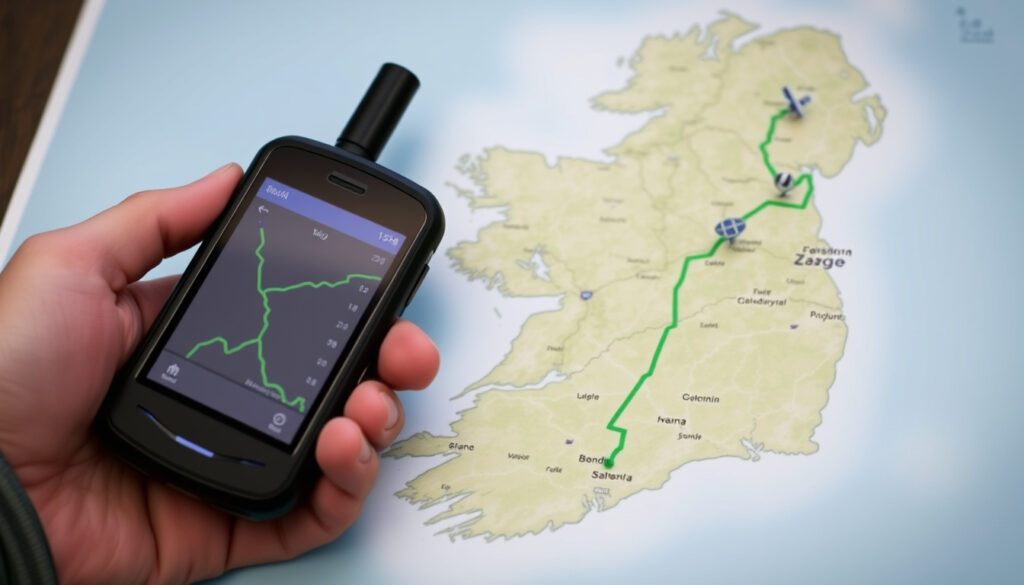
GPS Tracker Guide: Best Options, No Monthly Fee, Ireland
Choosing a GPS tracker means weighing subscription costs against privacy and legal risks — especially in Ireland. This guide cuts through the noise, covering the best options, no-monthly-fee models, how to detect hidden trackers, and the legal rules — all backed by concrete sources.
Global GPS tracking device market value (2024): USD 2.8 billion · Projected annual growth rate (CAGR): 15.2% (2024–2030) · Average battery life of a consumer GPS tracker: 2–7 days depending on model · Price range for no-monthly-fee trackers: EUR 30–150
Quick snapshot
- GPS signal is available globally from satellites (Wikipedia)
- Tracking another person without consent is illegal in Ireland under the Non-Fatal Offences Against the Person Act 1997 (Irish Statute Book)
- Most personal trackers require a cellular or satellite data plan (Consumer Reports)
- Under Irish law, Gardaí, the Army, or Revenue officials can use a tracking device without consent for up to four months (Irish Council for Civil Liberties)
- The global GPS tracker market is expected to grow 15.2% CAGR through 2030, driving more affordable no-fee models (Grand View Research)
The data points that set the stage for any GPS tracker decision show a clear trade-off between cost and capability.
| Metric | Value | Source |
|---|---|---|
| Market size | USD 2.8 billion (2024) | Grand View Research |
| Common battery life | 2–7 days (active tracking) | PCMag |
| Price range (no-fee) | EUR 30–150 | Consumer Reports |
| Legal status in Ireland | Allowed for own property; consent needed for others | Private Security Authority |
What is the best GPS tracker for a person?
Types of personal GPS trackers
Personal GPS trackers fall into three main categories: wearable devices (watches, clips), handheld units, and app-based phone trackers. Wearable trackers are common for children, elderly relatives, or solo runners. Handheld units are bulkier but offer longer battery life and often rugged design. Phone-based trackers use the device’s own GPS chip and cellular data, requiring no extra hardware but draining the phone battery.
Key features to compare
- Battery life: Varies from 2 days for real-time tracking to up to 30 days for periodic updates (PCMag).
- Tracking frequency: Real-time vs periodic pings. Real-time drains battery faster but gives accurate location.
- Subscription model: Monthly fee vs no-fee (pre-paid SIM or offline storage).
- Geofencing: Alerts when the device enters or leaves a defined area.
Top-rated models for personal use
Consumer Reports (the US nonprofit product testing organization) highlights models like the Apple AirTag for short-range finder tasks and the LandAirSea 54 for real-time vehicle tracking. For no-fee options, the Tracker GN-80 uses a pre-paid SIM and stores data locally when out of range (Consumer Reports).
Real-time tracking with frequent updates drains batteries in 2–3 days. Lower-cost no-fee trackers often sacrifice update frequency for weeks of runtime. Your choice depends on need: continuous location or occasional check-ins.
The pattern: no single device fits all use cases — balance battery, cost, and frequency based on your specific need.
Is there a GPS tracker with no monthly fee?
How no-monthly-fee trackers work
Subscription-free GPS trackers typically use one of two approaches: a pre-paid SIM card (top-up as needed) or offline logging (record data locally and upload later via Wi-Fi when the device returns home). Some models, like the TKSTAR TK905, allow you to insert a standard SIM with a pay-as-you-go plan from any carrier, avoiding recurring monthly charges (PCMag).
Pros and cons of subscription-free trackers
Upsides
- No ongoing monthly cost – pay once for hardware
- Lower total cost over time for infrequent use
- Privacy – less data sent to a central server
Downsides
- Limited remote features – no push notifications or live map
- Requires manual SIM top-ups or Wi-Fi sync
- Often less reliable real-time tracking in remote areas
Examples of no-fee GPS trackers
Consumer Reports tested several no-monthly-fee models and found the Vyncs Link (works with a pre-paid SIM) and the Munitio (offline logging with Wi-Fi sync) to be solid performers for basic tracking needs (Consumer Reports). Typical price range for these devices is EUR 30–150.
For a parent tracking a child on a short walk to school, a EUR 40 no-fee tracker with periodic updates is perfectly adequate. But for a business tracking a fleet of vehicles, the cost of real-time subscriptions is justified by the operational insight. Know your use case before you buy.
The catch: no-fee trackers shine for low-frequency monitoring but fall short when you need live location or instant alerts.
How can I track a GPS location?
Using a smartphone app
Most modern smartphones have built-in GPS receivers. Apps like Google Maps or Apple Find My use the phone’s GPS plus cellular/Wi-Fi for assisted positioning. To share your location with others, you can enable real-time sharing inside Google Maps or set up family sharing on iPhone.
Using a dedicated GPS tracking device
Dedicated trackers communicate via cellular (2G/3G/4G) or satellite (Iridium, Globalstar). The device transmits position data to a cloud platform, which you access through a web portal or companion app. Steps to view location data:
- Power on the tracker and ensure it has a clear view of the sky (for GPS lock).
- Connect to the tracking platform – install the app or log in to the web interface.
- Set update interval – choose between real-time (every 10–60 seconds) or periodic (every 5–60 minutes).
- View location on a map with history playback if supported.
Real-time tracking requires a network connection. If the tracker uses a cellular SIM, you must be within cell tower range. Satellite trackers work globally but cost more for hardware and data (PCMag).
Steps to view location data
The exact workflow varies by device, but the core steps are consistent: get a GPS fix, transmit coordinates, and display them on a map. Most dedicated trackers store historical routes that you can replay, which is valuable for reviewing trips or proving a vehicle’s location at a specific time.
If you only need occasional pings (e.g., checking that a child arrived at school), a no-fee tracker with a daily update is sufficient. For real-time route monitoring, you’ll pay a monthly fee for the network connection.
Can a cell phone detect a GPS tracker?
Methods to detect hidden GPS trackers
Detection methods fall into two categories: electronic and physical. Electronic detection uses apps that scan for Bluetooth or Wi-Fi signals emitted by nearby trackers. Physical inspection involves looking under the car, inside the wheel well, or around the OBD-II port.
Phone apps can detect Bluetooth trackers (e.g., Apple AirTag, Tile) using the phone’s radio. But dedicated GPS trackers that only transmit over cellular without broadcasting Bluetooth are invisible to phone-based scanners (Kaspersky).
Signs of a tracker on your vehicle
- Unexplained battery drain on the car battery.
- Small magnetic boxes attached under the chassis or inside the bumper.
- Wires tapped into the OBD-II port or fuse box.
Limitations of phone detection
GPS-only trackers (no Bluetooth, no Wi-Fi) are nearly undetectable by consumer phones. The most reliable method remains a thorough physical search. Professional private investigators use radio-frequency (RF) detectors to sweep for cellular transmissions, but these are not standard consumer tools (Wired).
The pattern: if you suspect a tracker, physical inspection is your best bet. Phone apps catch only the Bluetooth kind.
How far can a GPS tracker work?
Factors affecting range
GPS satellite signals have global coverage — any device with a clear view of the sky can receive the satellite fix. The limitation is not the GPS signal itself but the data transmission range. The tracker must send its location to a server, and that requires either a cellular network (range: within coverage area) or a satellite communications link (range: worldwide but expensive).
Cellular vs satellite trackers
Cellular trackers work only where there is cell tower reception. In remote areas of Ireland (e.g., parts of Connemara or the Wicklow mountains), coverage can be patchy. Satellite trackers use networks like Iridium or Globalstar and can transmit from anywhere on Earth, but they cost €200+ and require a satellite data plan (Spot (satellite tracker manufacturer)).
Typical range limits
- Cellular tracker: 5–50 km from a cell tower, depending on terrain and network.
- Satellite tracker: global (anywhere with sky view).
- Bluetooth tracker (e.g., AirTag): approx. 10–100 meters line-of-sight.
What this means: if you need to track a vehicle that travels through remote mountain roads, a satellite tracker is the only reliable option. For urban or suburban use, cellular is fine.
Is it illegal to have a GPS tracker?
Legal uses of GPS trackers
In Ireland, you can legally install a GPS tracker on property you own — a car, a bicycle, a bag. Businesses may track company vehicles, but only with strict conditions. The Data Protection Commission (Ireland’s privacy regulator) states that vehicle tracking can involve processing personal data because it reveals the location and behaviour of the driver. Employers must inform employees in advance about the tracking, how it operates, and every purpose for which the data will be used (DPC guidance PDF).
Consent and privacy laws in Ireland
The Private Security Authority (Irish security industry regulator) clearly says using vehicle trackers without the consent of the person who owns or drives the vehicle may breach data protection law. The Irish Council for Civil Liberties (civil rights watchdog) adds that if an employee is allowed personal use of a vehicle, it should be possible to disable the tracking outside working hours. A 2026 Law Society of Ireland (legal profession body) article reinforces that monitoring breaks, commutes, or personal time is almost certainly unlawful, and a privacy mode should be available for mixed-use vehicles.
Penalties for illegal tracking
Tracking another person without their consent can lead to civil liability under data protection law and criminal charges under the Non-Fatal Offences Against the Person Act 1997. The Criminal Justice (Surveillance) Act 2009 permits approved law-enforcement tracking devices to be placed and removed without consent, but only for specific investigations and with prior authorisation.
If you are an employer, you must conduct a Data Protection Impact Assessment before rolling out vehicle tracking, as required by the DPC. Employees should be told exactly what records are created, why, and how long they will be kept. Failure to do so risks fines and reputational damage.
The implication: tracking is legal — but only with proper consent and purpose. Stick to your own property, or face legal consequences.
Confirmed facts
- GPS signal is available globally from satellites – no subscription needed for reception.
- Most personal trackers require a cellular or satellite data plan for transmitting location.
- Tracking another person without consent is illegal in Ireland under the Non-Fatal Offences Against the Person Act 1997 (Irish Statute Book).
What’s unclear
- Exact battery life varies by usage patterns and manufacturer claims – lab tests differ from real-world results (PCMag).
- Effectiveness of phone-based detector apps in finding hidden GPS trackers is not consistently verified– most apps only catch Bluetooth devices, not cellular ones (Kaspersky).
“Vehicle tracking can involve the processing of personal data because it may reveal the location and behaviour of the person using the vehicle.”
– Data Protection Commission (Ireland’s privacy regulator)
“For consumers who want to keep an eye on a car or a loved one without a recurring fee, several no-monthly-fee trackers offer a solid, if limited, experience.”
– Consumer Reports (nonprofit product testing organisation)
The landscape of GPS trackers is evolving fast: market growth, cheaper hardware, and tighter regulation are converging. For an Irish buyer, the choice is simple: if you need live tracking and can stomach a monthly fee, a subscription device gives the best reliability. If privacy and cost are paramount, a no-monthly-fee tracker with offline logging works — provided you accept the trade-off in update frequency. For the employer or spouse considering covert tracking, remember that the law in Ireland demands consent and transparency. Skip the shortcuts; invest in proper solutions. An everyday user tracking their own property gets a handy tool — just don’t point it at someone else without their knowledge.
Related reading: Amazon Fire TV Stick 4K: What It Does, Free Channels, Monthly Fee · Corner Desk with Storage: Complete Buying Guide for Ireland
purdyandco.ie, iccl.ie, icompario.com, dataprivacy.foxrothschild.com, connectunion.ie
Frequently asked questions
How do I know if my partner is tracking my phone?
Check for unknown apps that request location permissions, especially those with hidden icons. Look for unexpected Bluetooth connections or battery drain. On iPhone, you can see which apps access your location in Settings > Privacy & Location Services.
What is the battery life of a typical GPS tracker?
Real-time trackers last 2–7 days; periodic update trackers can run 2–4 weeks. Battery life depends on update frequency, signal strength, and temperature (PCMag).
Can I use a GPS tracker to find my lost car?
Yes, if the tracker is active and has a data connection. Many vehicle trackers have geofence alerts that notify you if the car moves outside a set area.
Do all GPS trackers require a monthly subscription?
No. Many trackers work with a pay-as-you-go SIM or store data offline for later retrieval. However, real-time tracking over cellular always involves a data charge (Consumer Reports).
What is the best GPS tracker for a child?
Look for a wearable tracker with geofencing and SOS button. Models from Jiobit and AngelSense are designed for children and include a monthly subscription for real-time location and alerts.
How small can a GPS tracker be hidden?
Coin-sized trackers like the Apple AirTag (31mm diameter) are common. Dedicated cellular trackers can be as small as a credit card but require a SIM card and battery, so they are typically a bit larger (approx. 5×3×1 cm).
Can weather affect GPS tracker performance?
Heavy rain, snow, or dense cloud cover can weaken GPS signal acquisition, but modern receivers are robust. The bigger issue is physical obstructions: tunnels, underground parking, or metal containers (e.g., a shipping container) will block the signal.
More related posts
 Virgin Money Contact Number UK 0800 – Full Directory and Hours
 Queen Latifah’s Wife, Coming Out, Family & Relationships
 Novak Djokovic Net Worth 2026: $370M Business Empire
 CW Sellors Administration Collapse – Timeline, Impacts and Rescue
 Kylie Jenner Net Worth – $670M Forbes 2025 Valuation
 Octopus Energy Ofgem Compensation – Full Guide to Claiming
 Things to Do in Edinburgh – Kids, Couples, Free, Harry Potter Guide
 Bob Ross: Life, Paintings, Death, and Why Originals Are Rare