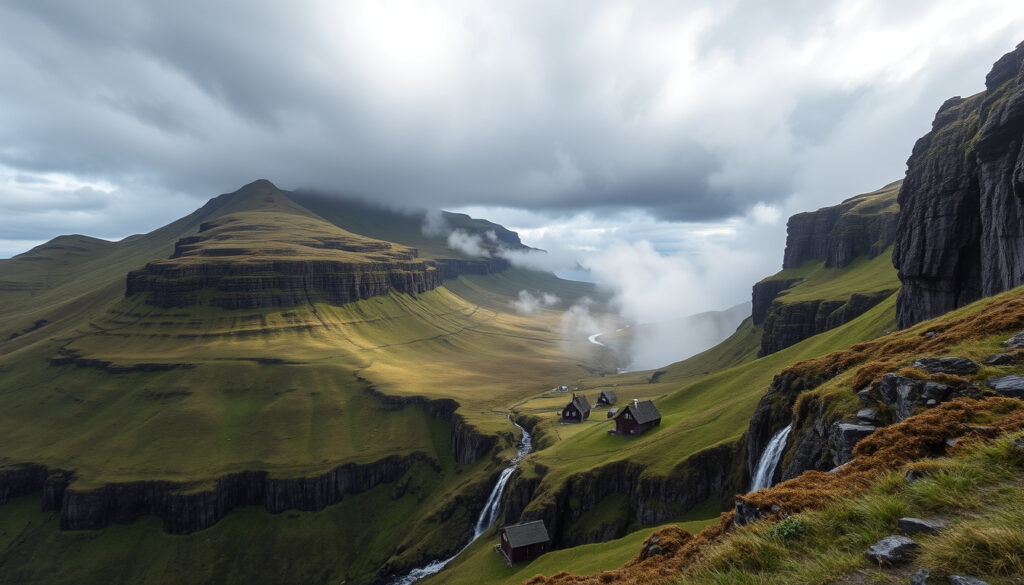
Faroe Islands Travel Guide: Language, Cost, Flights & More
There aren’t many places left where you can stand on a clifftop and see nothing but ocean, sheep, and the next island rising out of the mist. The Faroe Islands are that kind of place — and getting there from Ireland is more straightforward than you might think.
Population: 54,870 (as of November 2025) · Land area: 1,399 km² · Number of islands: 18 mountainous islands · Capital: Tórshavn · Status: Self-governing part of the Kingdom of Denmark · Location: North Atlantic Ocean, halfway between Scotland and Iceland
Quick snapshot
- The Faroe Islands are a self-governing part of the Kingdom of Denmark (Visit Faroe Islands)
- English is widely spoken, especially in tourism and among younger generations (Visit Faroe Islands)
- Direct flights from Dublin to Vágar Airport (FAE) operate regularly (Rome2Rio)
- Whether the 2021 “Closed for Maintenance” campaign will be repeated; it was a one-time voluntary initiative (Visit Faroe Islands)
- 2021: Temporary weekend closure for infrastructure maintenance — tourism resumed normally afterward (Visit Faroe Islands)
- The islands remain open year-round; 2026 flight bookings are already available from Dublin via Icelandair (Icelandair)
Here are the key facts about the Faroe Islands at a glance.
| Category | Detail |
|---|---|
| Official name | Faroe Islands (Føroyar / Færøerne) |
| Capital | Tórshavn |
| Population | 54,870 (November 2025) |
| Area | 1,399 km² (land area) |
| Government | Self-governing within Kingdom of Denmark |
| Language | Faroese; English widely spoken |
| Currency | Faroese króna (pegged to Danish krone) |
| Time zone | UTC+0 (WET); UTC+1 (WEST summer) |
| Driving side | Right |
Do they speak English in Faroe Islands?
Short answer: yes. Faroese is the official language, but English is widely spoken across the islands, particularly in tourism, hospitality, and among younger Faroese people. The Visit Faroe Islands tourism board says visitors can comfortably get by with English alone.
“Visitors can comfortably get by with English alone.” — Visit Faroe Islands tourism board
What language is spoken in the Faroe Islands?
Faroese is the native language, a North Germanic tongue descended from Old Norse. It’s closely related to Icelandic and partly mutually intelligible with some Norwegian dialects. Road signs, menus, and official documents are in Faroese first, though English translations appear in tourist areas.
Do Faroe Islanders speak English?
Yes — and to a high standard. English is taught as a second language from primary school. According to the Government of the Faroe Islands, English proficiency is comparable to other Nordic countries. If you’re an Irish traveller, you’ll have no trouble asking for directions, ordering food, or booking accommodation.
“English proficiency is comparable to other Nordic countries.” — Government of the Faroe Islands
An Irish traveller visiting the Faroe Islands will face no language barrier. English is the default second language, not a niche skill. You won’t need phrasebooks — just your usual manners.
The implication: language is a non-issue for trip planning. If you speak English, you’re set.
How do I get to Faroe Islands from Ireland?
Flying is the only practical option. There’s no ferry service from Ireland to the Faroe Islands. The destination airport is Vágar Airport (FAE), the sole commercial airport in the archipelago.
How long is the flight from Dublin to Faroe Islands?
Direct flights take approximately 2 hours from Dublin to Vágar Airport. That’s shorter than a Dublin-to-Málaga flight and roughly the same as Dublin-to-Paris. The distance is about 1,550 km, according to KAYAK.
Are there cheap flights from Dublin to Faroe Islands?
Prices vary by season. Icelandair lists Dublin-to-Vágar flights from about €709 for selected 2026 dates. Skyscanner shows a cheapest found fare of £309, with May as the cheapest month to fly. Momondo reports best one-way prices from €140 and round-trip from €352. Booking.com lists the average round-trip Dublin-Vágar ticket at £575.
Four airlines operate from Ireland to the Faroe Islands, including Atlantic Airways, Air France, and Icelandair, per Booking.com. Some flights connect through Copenhagen or Reykjavik, adding travel time.
- Direct flight: Dublin → Vágar (2 hours)
- Connecting via Copenhagen: 5–7 hours total
- Connecting via Reykjavik: 6–8 hours total
The cheapest fares often involve long layovers. Direct flights save time but cost more. May is the sweet spot for price and daylight hours.
The trade-off: time versus money. Irish travellers wanting the fastest route book direct with Atlantic Airways or Icelandair. Budget-conscious travellers connect via Copenhagen.
For another Ireland-centric travel route, check out the Liverpool to Dublin Ferry: 2025 Timetable & Prices.
Is it expensive to visit the Faroe Islands?
Yes — but the cost is predictable once you know where your money goes. The Faroe Islands are consistently described as expensive relative to mainland Europe, especially for accommodation, food, fuel, and car rental.
How much does a house cost in the Faroe Islands?
House prices vary dramatically. In Tórshavn, the capital, a standard family home might cost DKK 2–4 million (€270,000–€540,000). In rural villages, prices are significantly lower — sometimes under DKK 1 million. Mortgage rates are generally favourable for residents, but non-residents face restrictions on property purchase.
What is the cost of accommodation, food, and transport?
TravelWithHello estimates a mid-range daily budget of about USD 200–300 per person in 2026, including car rental and dining. A budget traveller might manage USD 100–150 by using hostels, cooking self-catered meals, and walking or taking buses.
- Accommodation: Guesthouse double room DKK 800–1,500 per night (€110–200); hotel double room DKK 1,500–3,000 (€200–400)
- Dinner at a mid-range restaurant: DKK 250–500 (€33–67) per person
- Bus from airport to Tórshavn: DKK 90–120 (€12–16) one way, about 45 minutes via the Vágar subsea tunnel
- Car rental: DKK 500–900 per day (€67–120), fuel expensive
The Faroe Islands charge high prices but offer free access to nature. Most visitors find the natural scenery worth the cost.
Bottom line: Expect to spend €200–€400 per day for a comfortable trip. Budget travellers can cut that in half by staying in hostels and cooking meals.
Upsides
- English widely spoken — no language barrier
- Direct flights from Dublin (~2 hours)
- Free access to stunning natural landscapes
- Safe and welcoming for solo travellers
Downsides
- High cost of accommodation, food, and transport
- Limited accommodation options in peak season
- Weather can be unpredictable and windy
- Short daylight hours in winter
Why are the Faroe Islands closed to tourists?
They are not closed. In 2021, the islands ran a voluntary “Closed for Maintenance” campaign over a single weekend to perform infrastructure repairs and preserve natural sites. Regular tourism resumed immediately after.
What was the maintenance closure purpose?
The 2021 campaign aimed to allow the islands’ infrastructure a short break from tourist footfall, enabling maintenance on trails and viewpoints. It was a one-time initiative, not a permanent policy.
Is the closure permanent or temporary?
Temporary and voluntary. The islands remain open year-round. The campaign was not repeated, and there are no plans for future closures. Tourism is a key part of the economy.
What this means for travellers: The Faroe Islands are open for business. The 2021 closure was a symbolic weekend event, not a restriction on travel.
Do Faroe Islands use the euro?
No. The official currency is the Faroese króna, which is pegged to the Danish krone (DKK). Euro is not accepted in shops or restaurants. However, credit cards are widely accepted, including Visa and Mastercard. Danish kroner are also accepted in most places.
What is the currency of the Faroe Islands?
The Faroese króna (FOK) is the local currency. It is issued by the Danish National Bank and is pegged at 1:1 with the Danish krone. Coins and notes are distinct from Danish currency, but shops often accept both.
Can I use Danish kroner or euros?
Danish kroner can be used freely. Euros are generally not accepted, but some tourist-oriented businesses may take them at poor exchange rates. It’s best to use local currency or credit cards.
Practical tip: Bring a credit card with no foreign transaction fees. Cash is rarely needed for day-to-day expenses.
Where are the Faroe Islands on the map?
The Faroe Islands are located in the North Atlantic Ocean, roughly halfway between Scotland (to the southeast) and Iceland (to the northwest). They are a self-governing part of the Kingdom of Denmark.
What country do the Faroe Islands belong to?
The Faroe Islands are a self-governing territory within the Kingdom of Denmark. They handle most domestic affairs, while Denmark manages foreign policy and defence. They are not part of the European Union.
What is the population of the Faroe Islands?
As of November 2025, the population is 54,870. The majority live in the capital, Tórshavn, and the surrounding islands. The islands are sparsely populated, with large areas of untouched nature.
For more on regional language identity, read about English to Welsh Translation: Best Tools & Key Phrases.
cheapflights.co.uk, skyscanner.net, flysas.com, travelwithhello.com, tripadvisor.com
Travelers planning a trip may also find the Faroe Islands travel guide for 2026 helpful for updated costs and tips.
Frequently Asked Questions
Do I need a visa to visit the Faroe Islands?
If you are an Irish citizen, no visa is required for short stays (up to 90 days). The Faroe Islands are not part of the Schengen Area, so separate immigration rules apply. Always check with the Faroe Islands authorities before travel.
What is the best time to visit the Faroe Islands?
Summer (June to August) offers the mildest weather and longest daylight hours. May and September are also good for fewer crowds. Winter has short days and strong winds, but the Northern Lights are visible.
Is the Faroe Islands safe for solo travelers?
Yes, the Faroe Islands are very safe. Crime rates are extremely low. Solo travellers should be prepared for changeable weather and have reliable transport.
Can I use my mobile phone in the Faroe Islands?
Yes, roaming from Irish providers works, but charges may apply. Check with your provider. WiFi is widely available in hotels and cafes.
What should I pack for a trip to the Faroe Islands?
Layered clothing, waterproof jacket, sturdy walking shoes, hat, gloves, and a scarf. Even in summer, temperatures are cool and rain is common.
Are there any direct flights from the UK to the Faroe Islands?
Yes, Atlantic Airways flies direct from London Gatwick to Vágar Airport. Flights from Edinburgh and Manchester also operate seasonally.
Is it worth visiting the Faroe Islands on a budget?
Yes, but you’ll need to plan carefully. Use hostels, eat at supermarkets, and take public buses. The natural scenery is free and stunning.
For Irish travellers: The Faroe Islands offer a unique, accessible Atlantic adventure. With direct flights from Dublin, no language barrier, and a manageable cost once you know the numbers, the islands are a realistic destination for your next trip.
More related posts
 Manchester United F.C. vs Ipswich Town – 3-2 Win, Stats and Highlights
 India vs West Indies T20 2026: Scorecard and Highlights
 Is Autism a Learning Disability? Key Differences & Co-Occurrence
 Pound to Thai Baht – Current Rate and 2026 Trends
 Dishwasher Repairs Near Me: Cost, Faults & When to Replace
 Matt Le Tissier: What He’s Doing Now, Family, and Career
 A Christmas Carol 2009: Scary, Best Version & Worth Watching?
 Charlotte Spencer: Actress Biography, Roles, and Family Facts