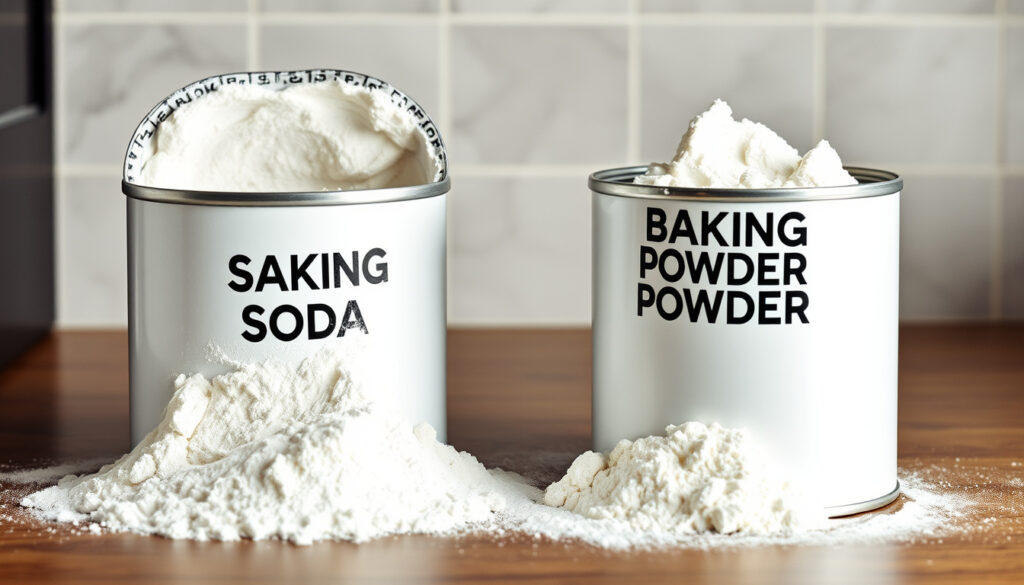
Is Baking Powder the Same as Baking Soda? Differences Explained
If you’ve ever stared at two matching-looking white canisters in the pantry wondering which one to grab for a recipe, you’re not alone. The baking soda versus baking powder question comes up constantly—and the answer matters more than most people realize. These two powders look nearly identical, but their chemical makeup and how they behave in recipes are fundamentally different.
Baking soda base: Sodium bicarbonate · Baking powder mix: Bicarb + acid + starch · Soda strength: 3-4× stronger than powder · Powder activation: Self-rising with liquid
Quick snapshot
- Baking soda is pure sodium bicarbonate (Medical News Today)
- They are not directly interchangeable (Krusteaz)
- Exact health benefits for itching relief lack clinical trials (Medical News Today)
- Precise shelf life varies by brand and storage conditions (Medical News Today)
- Know when to grab each for baking success and household cleaning (Krusteaz)
Baking powder vs. baking soda: What’s the difference?
Understanding the chemical difference between these two leavening agents is the key to using them correctly. The table below breaks down the key properties side by side.
| Property | Baking Soda | Baking Powder |
|---|---|---|
| Chemical formula | NaHCO₃ (pure sodium bicarbonate) | Sodium bicarbonate + acid + cornstarch |
| Activation | Requires acidic ingredient (vinegar, buttermilk) | Self-activates with moisture and heat |
| Strength | 3-4× stronger than powder | Weaker per volume; needs more |
| Components | Single compound | Three components: alkali, acid, buffer |
| Cleaning use | Yes — effective alkaline cleaner | No — cornstarch leaves gunky residue |
Baking soda is pure sodium bicarbonate—a single alkaline compound that reacts when it meets an acid. Baking powder is a pre-mixed combination of sodium bicarbonate, an acid source like cream of tartar, and cornstarch that acts as a moisture absorber to keep the ingredients separate until liquid is added.
Chemical makeup
Baking soda works as a base that neutralizes acids. When you combine it with ingredients like buttermilk, yogurt, vinegar, or citrus juice, a chemical reaction produces carbon dioxide gas—those bubbles that make batter rise. According to Medical News Today (health publication covering food science), baking powder contains its own acid built in, so it activates with just moisture and heat, making it suitable for non-acidic recipes where no natural acid exists.
Baking powder typically contains three components: an alkali (sodium bicarbonate), an acid (usually cream of tartar), and a buffer like cornflour that absorbs moisture and prevents premature reaction, as documented by Reco Blog (specialist cleaning resource).
How they work in recipes
The rule of thumb for baking soda is 1/4 teaspoon per 1 cup of flour, as recommended by Sally’s Baking Addiction (baking expert channel). Baking soda also raises the pH of batter, which speeds up the Maillard reaction—that chemical process responsible for golden-brown crusts on cookies, crackers, and fried foods.
Baking soda is roughly 3-4 times stronger than baking powder by volume, according to Krusteaz (baking ingredient manufacturer). Using too much soda produces a bitter, soapy taste—measure carefully.
Could I substitute baking powder for baking soda?
The short answer is no—not without adjusting the amounts. Direct substitution fails because the two agents work differently. Baking soda needs an acidic partner in your batter; baking powder already contains acid, so it won’t react the same way when swapped one-for-one.
Ratio adjustments
If a recipe calls for 1 teaspoon of baking soda and you only have baking powder, use 3 teaspoons of baking powder instead, per Krusteaz. Conversely, to replace 1 teaspoon of baking powder, combine 1/4 teaspoon of baking soda with 5/8 teaspoon of cream of tartar, as outlined by Medical News Today.
Recipe impacts
Using baking soda instead of powder in a non-acidic recipe causes the batter to rise too quickly and collapse, leaving a metallic or bitter aftertaste due to insufficient acid to complete the reaction, according to Krusteaz. For recipes with buttermilk or yogurt, bakers sometimes include both agents—one for lift and one for flavor balance—explains Sally’s Baking Addiction.
Baking powder is not suitable for cleaning. The cornstarch in powder creates a starchy, gunky residue when mixed with water, as documented by Reco Blog. Using it in drains or on surfaces will make matters worse.
What can I use if I don’t have baking powder?
Homemade mixes
Making your own baking powder is straightforward: blend 1 part baking soda with 2 parts cream of tartar (a ratio of roughly 1/4 teaspoon soda to 1/2 teaspoon cream of tartar per teaspoon of commercial powder). Store in a sealed container away from moisture. This DIY version works best in recipes you’ll bake immediately.
Store alternatives
Look for double-acting baking powder at supermarkets—it releases gas twice: once when mixed with liquid and again when exposed to oven heat, giving you more flexibility in prep time, according to Krusteaz. In Ireland, baking powder is typically labeled as such, though the term “bicarbonate of soda” refers to pure baking soda, notes Reco Blog.
Is baking soda and baking powder the same for cleaning?
No. Baking soda is a versatile household cleaner; baking powder is not. The alkaline properties of baking soda make it effective for scrubbing sinks, deodorizing refrigerators, and cleaning oven interiors. A paste of baking soda left overnight on a cold oven surface lifts grease buildup, per Medical News Today.
Cleaning mechanisms
Baking soda works as a mild abrasive that dissolves grease and absorbs odors. For tougher stains, combine 1 cup of baking soda with 1/4 cup of borax, suggests Medical News Today. The cornstarch filler in baking powder, however, becomes sticky when wet, leaving behind a residue that actually attracts grime.
Best uses for baking soda
Baking soda cleans ovens, drains, and kitchen surfaces effectively. It also deodorizes carpets and trash cans. Some people use it for dental hygiene or to neutralize acid reflux, though clinical evidence for health applications varies, as documented by Medical News Today.
For home cooks who keep only one leavening agent, baking soda is the more versatile choice—it works in baking with acidic ingredients AND handles household cleaning tasks, per Krusteaz.
When to use baking soda vs baking powder
Choosing the right agent comes down to whether your recipe contains acidic ingredients. Cookies, cakes, and quick breads made with buttermilk, yogurt, brown sugar, chocolate, or citrus zest need baking soda because the acid activates the leavening. Simple cakes, biscuits, and muffins made with neutral ingredients like milk and white flour typically call for baking powder, explains Medical News Today.
Recipe types
Dense, chewy baked goods—like chocolate chip cookies or tangy sourdough pancakes—benefit from baking soda’s fast-acting lift. Lighter, fluffier results in biscuits or sponge cakes come from baking powder’s gradual, double-action release, per Sally’s Baking Addiction.
Acid presence
Recipes without natural acids require baking powder. Those with acidic ingredients perform better with baking soda. If a recipe contains both baking soda and baking powder, the soda likely neutralizes excess acid while the powder provides additional rise, according to Medical News Today.
Baking soda is 100% sodium bicarbonate and versatile for both baking and cleaning, while baking powder’s added starch extends shelf life but makes it useless for household cleaning tasks, per Krusteaz.
What we know vs. what’s still uncertain
Confirmed
- Baking soda and baking powder are not interchangeable 1:1
- Baking soda is 3-4× stronger per volume
- Baking powder was invented in 1843 by Alfred Bird
- Baking soda works for cleaning; powder does not
- Bicarbonate of soda = baking soda (Ireland/UK term)
Unclear
- Exact clinical benefits for skin itching relief
- Precise shelf life varies by brand and humidity exposure
- Regional availability details for specific Irish supermarket brands
What experts say
Baking soda is pure sodium bicarbonate, whereas baking powder also contains an acid, such as cream of tartar, and cornstarch.
— Medical News Today (health publication covering food science)
The first Baking Powder was created in 1843 by English inventor Alfred Bird who was driven to find a yeast-free raising agent alternative as his wife was severely allergic.
— Reco Blog (cleaning and household tips resource)
Baking soda is about 3 to 4 times stronger than baking powder so you don’t need as much.
— Sally’s Baking Addiction (baking expert channel)
Home bakers across forums consistently recommend keeping both agents stocked. Swapping one for the other without adjusting ratios produces flat, bitter, or collapsed results—the kind of baking fail that wastes ingredients and confidence.
Related reading: Lemon and Blueberry Cake – Simple Moist Recipes Guide · How Long to Cook Sausages in Air Fryer: Times & Temps
Related coverage: baking powder differences fördjupar bilden av Baking Soda vs Baking Powder – Unterschiede, Austausch & Tipps.
Frequently asked questions
What is baking soda?
Baking soda is pure sodium bicarbonate (NaHCO₃), a single alkaline compound used as a leavening agent in baking and as a cleaning agent around the home.
What is bicarbonate of soda?
Bicarbonate of soda is the same thing as baking soda—the term used in Ireland, the UK, and some other regions. It refers to pure sodium bicarbonate.
Does baking soda expire?
Baking soda lasts about 6-12 months after opening if stored in a cool, dry place with the lid sealed. It loses potency over time, so test it with vinegar—if it doesn’t fizz vigorously, replace it.
Is baking powder gluten-free?
Most standard baking powders are gluten-free, as they contain sodium bicarbonate, an acid (usually cream of tartar), and cornstarch or another gluten-free starch. Always check the label if you have celiac disease or gluten sensitivity.
Can baking soda whiten teeth?
Baking soda is mildly abrasive and can help remove surface stains from teeth, which is why it’s included in many toothpastes. However, it isn’t a substitute for professional dental care, and excessive scrubbing can damage enamel.
What is baking soda called in Ireland?
In Ireland, baking soda is commonly labeled as “bicarbonate of soda” in supermarkets. Baking powder is typically called “baking powder” but is sometimes labeled differently in specialty shops.
Does baking soda stop itching?
Some people use a baking soda bath (about 1/4 cup in a tub of warm water) to soothe itchy skin from sunburn, poison ivy, or bug bites. However, clinical evidence for its effectiveness is limited, and it may irritate sensitive skin.
What does putting baking soda in a toilet tank do?
Baking soda in the toilet tank can help reduce odors and mild staining over time. Pour about 1/2 cup into the tank, let it sit for 10-15 minutes, then scrub and flush. For tough stains, a paste applied directly to the bowl works better.
More related posts
 Households Outdoor Lights Advice: Mistakes, Rules & Tips
 Japan Earthquakes Tsunami Warning – Advisory Lifted After 6.7 Quake
 Narendra Modi: Biography, Facts, and Myths
 Ric Flair: Health, Net Worth, Career, and More (2025)
 No Time to Die: Ending, Cast, Hit or Flop & Where to Watch
 Russ Abbot: Biography, TV Show, and Career Facts
 Translate Tagalog to English – Best Free Apps and Guides
 Woman of the Hour – Netflix Release, Cast and True Story