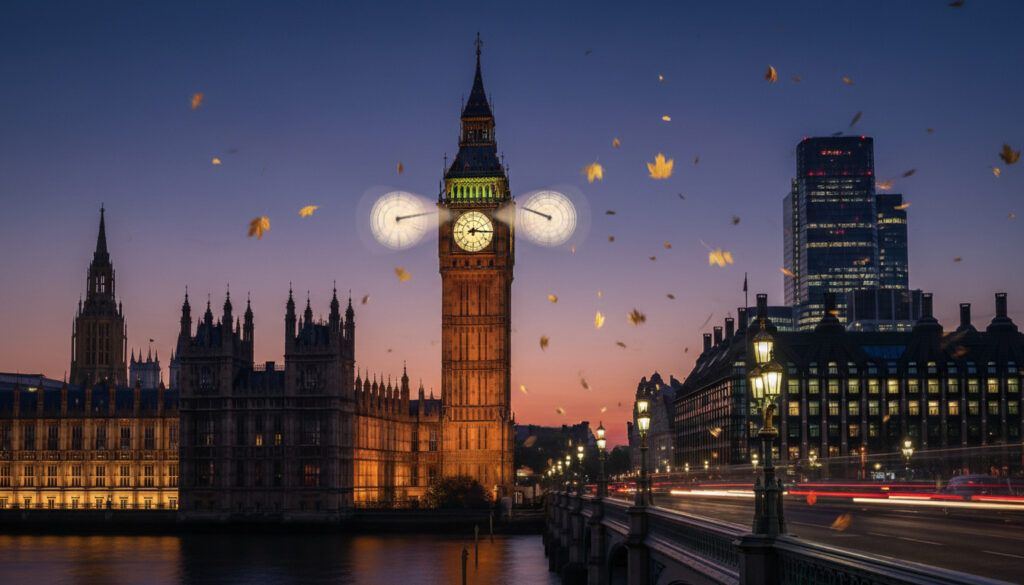
Have the Clocks Gone Back – UK 2024 Date and Impacts
British Summer Time concluded on October 27, 2024, marking the annual shift when UK clocks returned to Greenwich Mean Time. The change occurred at 2:00 am, instantly becoming 1:00 am and granting households an additional hour of rest while plunging evenings into earlier darkness.
This biannual adjustment affects millions of devices, schedules, and biological rhythms across England, Scotland, Wales, and Northern Ireland. While smartphones and computers adapted automatically to the new time, analog timepieces and vehicle dashboards required manual correction.
Understanding the precise timing, historical origins, and practical implications helps clarify why the UK maintains this century-old practice despite recurring debates about its modern relevance.
Have the Clocks Gone Back in 2024?
Yes. The transition from British Summer Time to Greenwich Mean Time took place on Sunday, October 27, 2024. At 2:00 am BST, clocks shifted backward to 1:00 am GMT, ending seven months of daylight saving time.
The immediate impact included darker evenings, with London sunsets shifting to 4:41 pm and sunrises moving to 6:45 am. Time and Date records confirm these specific illumination changes for the capital.
- The transition shifted London sunsets to 4:41 pm with sunrises at 6:45 am.
- Road accidents historically spike 6-11% on the Monday following the fall back.
- Circadian disruption creates “social jetlag” affecting productivity and mood.
- Approximately 30 extra UK road deaths annually link to DST transitions.
- Great Britain and Northern Ireland follow identical timing rules.
- The Republic of Ireland synchronized with UK dates on October 27, 2024.
- Modern devices auto-adjust while vehicle clocks and appliances need manual updates.
| Fact | Details |
|---|---|
| 2024 Fall Back Date | Sunday, October 27 |
| Exact Time | 2:00 AM BST → 1:00 AM GMT |
| Legal Basis | Last Sunday in October (UK law) |
| Auto-Adjustment | Smartphones, computers, network devices |
| Manual Adjustment Required | Analog clocks, vehicle dashboards, microwaves |
| Regions Affected | England, Scotland, Wales, Northern Ireland |
| EU Alignment | Identical end dates retained post-Brexit |
| 2025 Forward Date | March 30 at 1:00 AM GMT |
When and What Time Do the Clocks Go Back?
UK daylight saving time operates under strict calendrical rules aligned with European Union Directive 2000/84/EC, which the UK retained following Brexit. Clocks fall back at 2:00 am BST on the final Sunday of October each year.
The Specific Timing Mechanics
The change happens instantaneously. At 2:00 am BST on the designated Sunday, time reverts to 1:00 am GMT. This creates a 25-hour day and provides the perception of an extra hour’s sleep. Official time change data confirms this pattern repeats annually unless legislation modifies the practice.
How the Dates Are Determined
The “last Sunday” rule means the specific calendar date varies between October 25 and October 31. For 2024, the final Sunday fell on October 27. In 2025, the date will be October 26, while 2026 will see the change on October 25.
Most internet-connected devices update automatically. However, ovens, microwaves, wristwatches, and vehicle clocks require manual resetting. Check these within 24 hours of the change to avoid scheduling conflicts.
What Happens When the Clocks Go Back?
The autumn transition triggers measurable effects across public health, road safety, and economic productivity. While individuals gain an apparent hour of sleep, the shift disrupts circadian rhythms adapted to summer light patterns.
Health and Sleep Disruption
The extra hour theoretically benefits rest, but research indicates the change creates “social jetlag.” This misalignment between biological clocks and social schedules affects sleep quality, mood, and cognitive performance for several days post-transition.
Safety and Road Risks
Darker evenings correlate with increased traffic incidents. Studies indicate road accidents rise 6-11% on the Monday following the clock change. Research suggests approximately 30 additional UK road deaths occur annually due to daylight saving time transitions, with the autumn change contributing significantly to this statistic.
Pedestrian fatalities increase during evening hours following the October change. Drivers should exercise heightened caution during the first week of GMT, particularly during 4:00 pm to 6:00 pm when visibility drops sharply.
Workplace productivity typically dips for 48-72 hours post-change due to sleep inertia. However, the spring transition generally causes more severe disruption than the autumn fall back.
When Do the Clocks Go Forward Next?
The next transition occurs on Sunday, March 30, 2025. At 1:00 am GMT, clocks will advance to 2:00 am BST, marking the beginning of British Summer Time. Visit London official guidance confirms this date follows the last Sunday in March pattern.
Looking ahead, 2026 will see the forward change on March 29, while the autumn 2026 return to GMT will occur on October 25. These dates apply uniformly across the United Kingdom including Gibraltar, Jersey, Guernsey, and the Isle of Man.
How Has British Summer Time Evolved Since 1916?
The United Kingdom first implemented daylight saving time through the Summer Time Act of 1916 during World War I. The measure aimed to reduce coal consumption and extend evening daylight for agricultural and industrial production.
- : Parliament passes the Summer Time Act, introducing BST to support war efforts.
- : Double Summer Time operates during WWII, with clocks advancing two hours ahead of GMT.
- : The UK experiments with permanent BST, keeping clocks one hour ahead year-round.
- : EU harmonization standardizes start and end dates across member states.
- : Clocks fall back October 27, maintaining alignment with EU schedules post-Brexit.
Historical records document these shifts in legislative approach, though the fundamental biannual pattern has remained consistent since the 1996 harmonization.
What Facts Are Confirmed Versus Uncertain?
Established Information
- UK clocks changed October 27, 2024 at 2:00 am BST
- Rules apply uniformly across England, Scotland, Wales, and Northern Ireland
- Republic of Ireland shares identical transition dates
- Next forward change: March 30, 2025
- Road accidents increase 6-11% post-change
Remaining Uncertainties
- Exact individual health impacts vary by person
- Specific device auto-adjustment depends on manufacturer settings
- Future legislative changes to perpetual BST remain unconfirmed
- Long-term economic benefits versus costs continue under debate
Why Does the UK Change Its Clocks?
The original 1916 legislation sought energy efficiency during wartime coal shortages. Contemporary justifications emphasize evening daylight extension for recreation and reduced road accidents during evening commutes. However, comparative studies with non-changing jurisdictions question the magnitude of these benefits.
The UK maintains alignment with EU daylight saving dates despite Brexit, suggesting practical coordination outweighs independent scheduling. Pound to Thai Baht – Current Rate and 2026 Trends illustrates how time coordination affects international financial markets, though currency fluctuations operate independently of seasonal time changes.
Recent parliamentary petitions advocating for permanent British Summer Time have failed to generate legislative change. The government retains the current system pending broader European coordination or compelling evidence favoring alteration.
What Do Official Records Indicate?
Clocks spring forward, fall back.
UK Government mnemonic guidance
Expect grogginess Monday morning as circadian rhythms adjust to the new time regime.
BBC health correspondents
Key Takeaways for the 2024 Transition
The October 27, 2024 clock change successfully transitioned the UK from BST to GMT, providing an extra hour of sleep while reducing evening daylight. Key impacts include heightened road risks, temporary circadian disruption, and the necessity of manual time adjustments for non-connected devices. 2000 Euros in Pounds – Live Rate and 2026 Trends offers additional context on cross-border coordination affecting travel and finance.
Frequently Asked Questions
Do all clocks change automatically?
No. Smartphones, computers, and network-connected devices update automatically. Analog clocks, vehicle dashboards, microwaves, and wristwatches require manual adjustment.
Does this affect travel to Europe?
The Republic of Ireland follows identical dates. Most EU countries synchronized their clock changes with the UK on October 27, 2024, minimizing travel disruption.
What about US daylight saving?
The United States operates on different dates, changing the second Sunday in March and first Sunday in November, creating temporary time differences with the UK.
Will the UK abolish clock changes?
No legislation currently proposes abolition. The government maintains the existing system aligned with EU Directive 2000/84/EC retained post-Brexit.
Why did I wake up feeling tired despite the extra hour?
Circadian rhythms often lag behind clock time. Social jetlag affects sleep quality and morning alertness for 48-72 hours despite the apparent gain.
More related posts
 Alcohol Units Per Week: What 14 Units Means for Health
 Cast of Heated Rivalry – Full Cast and Character Guide
 Vet for Small Animals Near Me: Longford Clinics & Costs
 Sheffield Wednesday vs Middlesbrough: H2H, Results, Stats
 Cat D Car Meaning in Ireland: Repairable Write-Off Guide
 Sri Lanka vs Bangladesh 1st Test Match Scorecard – Full Stats Galle 2025
 Queen Latifah’s Wife, Coming Out, Family & Relationships
 Country to Country 2026: Dates, Lineup, Tickets, Venues