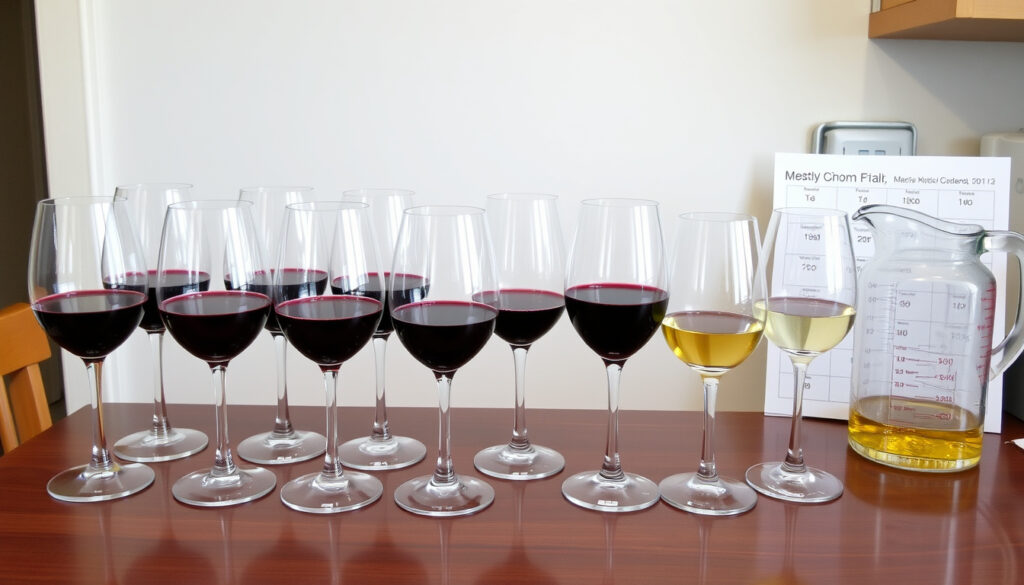
Alcohol Units Per Week: What 14 Units Means for Health
If you’ve ever wondered how that weekly wine habit stacks up against official advice, you’re not alone. The UK’s low‑risk drinking guideline of 14 alcohol units per week is meant to help people keep health risks low, but converting that number into real drinks can be confusing.
UK low-risk weekly limit (men & women): 14 units ·
Alcohol unit definition: 10 millilitres (8 g) of pure alcohol ·
Pint of beer (4% ABV): ~2.3 units ·
Glass of wine (175ml, 12% ABV): ~2.1 units ·
Bottle of wine (750ml, 12% ABV): ~10 units
Quick snapshot
- UK low-risk limit is 14 units per week for both men and women (NHS (UK health authority))
- Alcohol is classified as a Group 1 carcinogen by IARC (IARC (cancer research agency))
- The liver can regenerate after stopping alcohol (NHS)
- Optimal number of alcohol-free days for liver health
- Threshold for zero health risk (likely no safe level)
- Individual variation in liver damage susceptibility
- Fatty liver can start to reverse within days of abstinence (NHS)
- After several alcohol-free days, liver enzymes often improve (NHS)
- New unit calculators and drink tracking apps are emerging to help people stay within limits
- More countries may adopt a single 14‑unit limit regardless of gender
The numbers behind the guideline boil down to a few key facts. Here’s a quick reference table.
| Metric | Value |
|---|---|
| UK weekly limit (men & women) | 14 units |
| 1 unit of alcohol | 10ml pure alcohol |
| Bottle of wine (750ml, 12% ABV) | ~10 units |
| Pint of beer (4% ABV) | ~2.3 units |
| Glass of wine (175ml, 12% ABV) | ~2.1 units |
What is 14 units of alcohol per week equivalent to?
Fourteen units might sound abstract until you line it up against what people actually drink. According to the NHS (UK health authority), 14 units is equivalent to about 6 pints of average-strength beer (4% ABV) or 10 small glasses of lower-strength wine (125ml, 12% ABV). Another common benchmark: 1.5 bottles of wine (750ml, 12% ABV) push you to roughly 15 units – just over the limit.
How many units of alcohol in a pint?
It depends on the strength. A pint (568ml) of 4% ABV beer contains about 2.3 units. A lower-strength pint at 3.6% ABV delivers roughly 2 units. These figures come from Alcohol Change UK (alcohol charity and research body).
How many units of alcohol in a glass of wine?
A standard 175ml glass of wine at 12% ABV holds about 2.1 units, according to the same Alcohol Change UK source. If you’re drinking a larger 250ml glass, that jumps to roughly 3 units. A small 125ml glass at 12% ABV comes in at about 1.5 units.
For the average wine drinker, two large glasses most evenings will exceed 14 units by Wednesday. The guideline isn’t a weekly allowance to be used up – it’s a ceiling that, when approached regularly, raises health risks across the board.
Is 2 bottles of wine a week too much?
Two standard bottles of wine (750ml each, 12% ABV) contain about 20 units – that’s 6 units above the UK low-risk guideline. Drinking 20 units per week significantly increases the risk of liver disease, certain cancers, and cardiovascular problems, as shown in NHS data. The Drinkaware (UK alcohol education charity) notes that regularly exceeding 14 units more than doubles the lifetime risk of developing alcohol-related conditions.
What this means: two bottles a week is clearly above the low‑risk threshold. Cutting back even to 1.5 bottles brings you closer to the 14‑unit cap and reduces cumulative harm.
How many glasses of wine a week is considered an alcoholic?
The term “alcoholic” isn’t defined by a specific number of glasses. Medical professionals diagnose alcohol use disorder (AUD) using a set of criteria, not a weekly unit count. However, the NHS defines heavy drinking as regularly exceeding 14 units per week. The more you exceed that threshold, the higher your risk of developing dependence.
What is the difference between heavy drinking and alcohol dependence?
Heavy drinking means consuming more than the low‑risk limit consistently. Dependence (alcoholism) involves a strong craving, loss of control, and physical withdrawal when stopping. Many heavy drinkers are not dependent, but the risk of dependence rises with the volume and frequency of consumption.
A person drinking 20 units a week may not have AUD, but their liver and cancer risk are already elevated. The label doesn’t matter as much as the dose.
What are the first signs of liver damage from alcohol?
Early signs are often subtle: fatigue, mild abdominal discomfort, and raised liver enzymes (ALT, AST) on a blood test. The first stage, fatty liver disease, is reversible with abstinence. If drinking continues, inflammation (alcoholic hepatitis) and scarring (cirrhosis) can develop. According to Drinkaware, the liver is remarkably resilient – but only if the damage is caught early.
Can early liver damage be reversed?
Yes. Fatty liver can resolve within weeks to months of stopping alcohol. Even alcoholic hepatitis has a good prognosis with complete abstinence. Once cirrhosis develops, the damage is permanent, though further scarring can be slowed.
How many alcohol-free days to cleanse the liver?
The liver begins repairing itself after just a few days without alcohol. The NHS advises having several drink‑free days each week, and many experts recommend at least 2–3 alcohol‑free days. Complete recovery from fatty liver may take several weeks to months of abstinence.
Why this matters: alcohol‑free days aren’t a quick detox – they’re a regular maintenance strategy. Each day without alcohol gives your liver a chance to metabolise fat and repair cell damage.
Clarity check
Confirmed facts
- UK limit of 14 units per week is based on epidemiological evidence (NHS)
- Liver can regenerate after alcohol cessation (Drinkaware)
- Alcohol is classified as a Group 1 carcinogen by IARC (IARC)
What’s unclear
- Optimal number of alcohol-free days for liver health
- Threshold for zero health risk (likely no safe level)
- Individual variation in liver damage susceptibility
What the experts say
“Men and women are advised not to drink more than 14 units a week on a regular basis.”
— NHS (UK health authority)
“The low-risk guidelines advise drinking no more than 14 units a week, spread over three or more days with several drink-free days and no bingeing.”
— Drinkaware (UK alcohol education charity)
For the average wine drinker, the choice is clear: replacing two bottles a week with one and a half, and adding a couple of alcohol‑free days, is the single most effective step to lower your health risks. Or risk the cumulative toll that 20+ units inflicts on liver, heart, and cancer risk over a lifetime.
knowledge4policy.ec.europa.eu, becclesmedical.co.uk, unimed.co.uk, patient.info, ias.org.uk
For a clearer picture of how your typical pint fits into the weekly 14-unit limit, consult this guide to units in a pint that breaks down the numbers for beer, lager, and stout.
Frequently asked questions
Can you drink alcohol while taking medication?
Many medications interact with alcohol. Always check the label or consult a pharmacist. Paracetamol and alcohol combined can cause liver damage; some antibiotics and antidepressants also have negative interactions.
Does drinking on an empty stomach affect blood alcohol?
Yes. Alcohol is absorbed faster on an empty stomach, leading to higher peak blood alcohol concentration. Eating slows absorption and reduces the overall intoxicating effect.
How does alcohol affect sleep quality?
Alcohol disrupts the sleep cycle, particularly REM sleep. Even small amounts can lead to poorer sleep quality, more awakenings, and less restorative rest. Avoiding alcohol for 2–3 hours before bed helps.
Is it safe to drink alcohol after a workout?
Alcohol after exercise can impair muscle recovery, dehydrate you, and reduce protein synthesis. It’s best to wait at least 24 hours if you’ve done intense training, or keep alcohol intake very low.
What is the difference between a standard drink and a unit?
A standard drink varies by country (e.g., UK: 8g alcohol; US: 14g). One UK unit equals 8g of pure alcohol. So a standard drink in the US (14g) is 1.75 UK units. Always check local definitions.
Does alcohol-free beer contain alcohol?
Most “alcohol-free” beers contain up to 0.5% ABV. While negligible for many, it can be a concern for recovering alcoholics, pregnant individuals, or those with liver conditions. Labelling varies by country.
More related posts
 Deep Fried Mars Bar – History, Recipe and Calories
 Sunderland vs West Ham: Head to Head, TV & Fan Guide
 Count Dooku: Why He’s Called Count, Sith Name & Analysis
 S&P 500 Live – Current Value, Chart and Insights
 Guardians of the Galaxy 3 – Release Date, Cast and Soundtrack Guide
 Google Translate English Spanish – Step-by-Step Guide and Tips
 Best Interest Rates Savings 2026: Compare UK, Ireland & India
 Things to Do in Edinburgh – Kids, Couples, Free, Harry Potter Guide