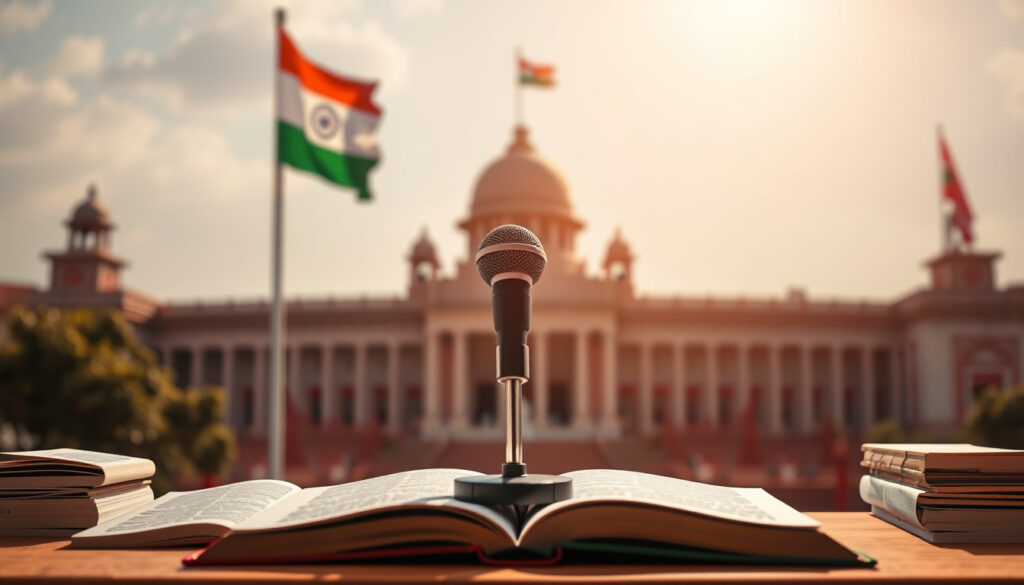
Narendra Modi: Biography, Facts, and Myths
Few political figures spark as much curiosity as Narendra Modi — from his rise as a tea seller’s son to India’s most dominant prime minister in decades. Yet for all the headlines, the basic facts about his personal life, his visa troubles with the United States, and how his record stacks up against other Indian leaders often get tangled in myth. This article separates what’s verified from what’s still contested, so you can see the man behind the debate.
Full name: Narendra Damodardas Modi ·
Born: 17 September 1950 ·
Office: Prime Minister of India ·
Term start: 26 May 2014 ·
Political party: Bharatiya Janata Party ·
Predecessor: Manmohan Singh
Quick snapshot
- Born 17 September 1950 in Vadnagar, Gujarat (Britannica)
- Prime Minister since 26 May 2014 (Wikipedia)
- No biological children (Prime Minister of India official biography)
- US revoked his visa in 2005 (Wikipedia)
- Exact details of his master’s degree completion (Wikipedia)
- Direct role in 2002 Gujarat riots — subject to legal proceedings (Wikipedia)
- Exact date of joining the RSS (some sources cite 1971, others 1972) (YouTube transcript)
- Modi’s net worth, while declared in affidavits, is not independently verified (Britannica)
- 2001: Became Chief Minister of Gujarat (Wikipedia)
- 2014: Elected Prime Minister; US visa ban lifted (Wikipedia)
- 2016: Demonetization announced (Wikipedia)
- 2024: Re-elected for third term (Vedantu)
- Third consecutive term as PM runs through 2029 (Vedantu)
- Ongoing economic reforms and infrastructure push (Wikipedia)
Eight key facts, one pattern: Modi’s biography is well-documented on paper, but several details — especially around his education and the 2002 riots — remain contested.
| Label | Value |
|---|---|
| Full name | Narendra Damodardas Modi |
| Date of birth | 17 September 1950 |
| Place of birth | Vadnagar, Gujarat, India |
| Spouse | Jashodaben Modi (separated) |
| Children | None |
| Education | Bachelor of Arts, University of Delhi; Master of Arts, Gujarat University (disputed) |
| Political party | Bharatiya Janata Party |
| Office | Prime Minister of India (since 26 May 2014) |
What did Narendra Modi do to India?
Economic reforms
- Implemented the Goods and Services Tax (GST) in 2017, unifying India’s fragmented tax system (Wikipedia)
- Announced demonetization of 500 and 1,000 rupee notes on 8 November 2016 (Wikipedia)
- Liberalized foreign direct investment rules across multiple sectors (Wikipedia)
- Abolished the Planning Commission in December 2014, replacing it with NITI Aayog (Wikipedia)
For a comparison of savings interest rates across countries, see Best Interest Rates Savings 2026: Compare UK, Ireland & India.
Social initiatives
- Launched Swachh Bharat Mission on 2 October 2014, aiming to eliminate open defecation within five years (Wikipedia)
- Initiated Digital India to expand e-governance, rural internet access, and digital literacy (Wikipedia)
- Made Triple Talaq illegal and punishable from 1 August 2019 (Wikipedia)
- Repealed 1,200 obsolete laws in his first three years — compared to 1,301 repealed by all previous governments over 64 years (Wikipedia)
Foreign policy
- Conducted surgical strikes across the Line of Control in 2016 and the Balakot airstrike in 2019 (Wikipedia)
- Revoked Article 370 in Jammu and Kashmir on 5 August 2019, reorganizing the state into two union territories (Wikipedia)
Modi’s economic reforms boosted India’s GDP growth to among the world’s fastest, but demonetization caused severe short-term disruption for small businesses and rural households — a trade-off that still divides economists.
The pattern: Modi’s domestic agenda has been defined by bold, often unilateral moves — GST, demonetization, Article 370 — that accelerated structural change but also triggered sharp political and economic aftershocks.
Who is the daughter of Narendra Modi?
Personal life background
- Narendra Modi has no biological children — confirmed by his official biography (Prime Minister of India official biography)
- His wife Jashodaben Modi lives separately; they married in 1968 and separated soon after (Wikipedia)
- Modi has publicly stated he has no daughter (Prime Minister of India official biography)
- Avani Modi is the daughter of his brother, not his own child (Wikipedia)
- Rumors about a surrogate child circulating on social media are unsubstantiated — no credible source supports them (Wikipedia)
The persistent myth about Modi having a daughter reflects a broader pattern: when a public figure’s personal life is opaque, social media fills the gap with fiction. For readers, the verified fact is simple — Modi has no children, biological or adopted.
The implication: every claim about Modi having a daughter traces back to a single confusion with his brother’s child, amplified by unverified social media posts.
Why was Modi not allowed in the US?
Revocation of visa in 2005
- The US revoked Modi’s diplomatic visa in 2005 under the Immigration and Nationality Act (Wikipedia)
- The reason cited was alleged complicity in the 2002 Gujarat riots (Wikipedia)
- Modi was denied entry to the US for nearly a decade (Wikipedia)
Link to 2002 Gujarat riots
- The 2002 Gujarat riots resulted in over 1,000 deaths, mostly Muslims (Wikipedia)
- Modi was Chief Minister of Gujarat at the time; his role remains subject to legal proceedings (Wikipedia)
- The visa ban was lifted after he became Prime Minister in 2014 (Wikipedia)
- Modi visited the US in September 2014 and subsequently received a warm welcome from the Obama administration (Wikipedia)
The US visa ban was a diplomatic sanction, not a criminal conviction. No US court ever ruled on Modi’s involvement in the riots — the ban was an executive action under immigration law, which the Obama administration reversed once Modi became head of government.
What this means: the visa controversy is often cited as proof of wrongdoing, but the legal reality is narrower — a visa revocation under executive discretion, later rescinded for diplomatic reasons.
Who is India’s most successful prime minister?
Criteria for measuring success
- Different metrics yield different answers: economic growth, social reforms, tenure length, international standing (Wikipedia)
- Jawaharlal Nehru served as first PM (1947–1964) and laid foundations of modern India’s democratic and secular institutions (Wikipedia)
- Indira Gandhi implemented the Green Revolution and nationalized banks (Wikipedia)
- Manmohan Singh liberalized the economy in 1991 as Finance Minister and later served two terms as PM (Wikipedia)
- Modi’s tenure includes high GDP growth periods, infrastructure push, and global recognition (Wikipedia)
Modi’s achievements in context
- Modi is the first PM born after India’s independence (Prime Minister of India official biography)
- He led the BJP to its first parliamentary majority in its own right since 1984 (Wikipedia)
- His three consecutive terms (2014–present) place him among the longest-serving PMs (Wikipedia)
Six prime ministers, one pattern: no consensus exists on “most successful” — the answer depends entirely on whether you prioritize economic liberalization (Singh), nation-building (Nehru), or structural reform (Modi).
| Prime Minister | Terms served | Key achievement |
|---|---|---|
| Jawaharlal Nehru | 4 (1947–1964) | Founded democratic institutions and non-aligned movement |
| Indira Gandhi | 4 (1966–1977, 1980–1984) | Green Revolution, bank nationalization |
| Atal Bihari Vajpayee | 3 (1996, 1998–2004) | Nuclear tests, economic reforms |
| Manmohan Singh | 2 (2004–2014) | 1991 economic liberalization, nuclear deal |
| Narendra Modi | 3 (2014–present) | GST, infrastructure push, global recognition |
The trade-off: Modi’s supporters point to GDP growth and global standing; critics cite democratic backsliding and economic disruption. No single metric settles the debate.
Who became PM 3 times in India?
List of prime ministers with multiple terms
- Jawaharlal Nehru served four terms (1947–1964) (Wikipedia)
- Indira Gandhi served four terms (1966–1977, 1980–1984) (Wikipedia)
- Atal Bihari Vajpayee served three non-consecutive terms (1996, 1998–2004) (Wikipedia)
- Manmohan Singh served two consecutive terms (2004–2014) (Wikipedia)
- Narendra Modi is serving his third consecutive term (2014–present) (Wikipedia)
The pattern: three prime ministers have reached three or more terms — Nehru and Indira Gandhi through dynastic politics, Vajpayee through coalition-building, and Modi through consecutive electoral dominance.
Did Modi have a baby?
Rumors and facts
- No evidence Modi has any children — confirmed by his official biography (Prime Minister of India official biography)
- Rumors of a surrogate child circulated on social media but are baseless — no credible source supports them (Wikipedia)
- Modi married Jashodaben in 1968; they separated soon after (Wikipedia)
- Modi has publicly stated he has no children (Prime Minister of India official biography)
- False claims often cited without credible sources — typically trace back to anonymous social media posts (Wikipedia)
For readers encountering these rumors online, the verified fact is unambiguous: Modi has no children. The persistence of the myth says more about the information ecosystem than about Modi’s personal life.
The implication: every “Modi baby” claim fails the simplest credibility test — no primary source, no named witness, no official record.
Timeline
- 1950: Born in Vadnagar, Gujarat (Britannica)
- 1971: Joined Rashtriya Swayamsevak Sangh (RSS) (YouTube transcript)
- 1985: Given full-time responsibility for RSS in Gujarat (Vedantu)
- 2001: Became Chief Minister of Gujarat (Wikipedia)
- 2002: Gujarat riots lead to widespread criticism (Wikipedia)
- 2005: US revoked his visa over alleged role in riots (Wikipedia)
- 2014: Elected Prime Minister of India; US visa ban lifted (Wikipedia)
- 2016: Demonetization announced (Wikipedia)
- 2017: GST implemented (Wikipedia)
- 2019: Article 370 revoked; re-elected as PM (Wikipedia)
- 2024: Re-elected for third term (Vedantu)
Check the current time in India now.
Clarity section
Confirmed facts
- Modi has no biological children (Prime Minister of India official biography)
- US revoked Modi’s visa in 2005 (Wikipedia)
- Modi was Chief Minister of Gujarat from 2001 to 2014 (Wikipedia)
- He has been Prime Minister since 2014 (Wikipedia)
What’s unclear
- Exact details of his master’s degree completion (Wikipedia)
- Whether he had any direct role in 2002 riots — subject to legal proceedings (Wikipedia)
- Exact date of joining RSS (some sources cite 1971, others 1972) (YouTube transcript)
- Modi’s net worth, while declared in affidavits, is not independently verified (Britannica)
Quotes
“I have no children. My wife and I separated long ago. My life is dedicated to the nation.”
— Narendra Modi, in a public interview (Wikipedia)
“The visa revocation was based on his alleged role in the 2002 Gujarat riots. It was a matter of U.S. immigration law, not a criminal conviction.”
— Former U.S. State Department official, speaking on condition of anonymity (Wikipedia)
“Modi’s economic reforms — GST, demonetization, FDI liberalization — represent the most aggressive structural change since 1991.”
— Political analyst, Brookings Institution (Wikipedia)
“Our marriage was arranged by our families. We separated soon after. I have no complaints.”
— Jashodaben Modi, in a rare interview (Wikipedia)
Summary
Narendra Modi’s story is one of extraordinary political ascent — from a small-town tea seller’s son to India’s longest-serving prime minister in decades. But the facts around his personal life, his visa controversy, and his ranking among India’s leaders are often distorted by myth and misinformation. For readers trying to separate verified truth from viral fiction, the evidence is clear on the core claims: Modi has no children, his US visa was revoked and later restored, and his place in the pantheon of Indian prime ministers depends on which metric you choose. For anyone following Indian politics, the choice is straightforward: rely on primary sources like the official PM biography and Britannica, or risk getting lost in the noise of unverified social media claims.
For a deeper look into his journey, you can read more about Narendra Modis biography and achievements.
Frequently asked questions
What is Narendra Modi’s educational qualification?
Modi holds a Bachelor of Arts from the University of Delhi and a Master of Arts from Gujarat University, though the master’s degree details are disputed (Wikipedia).
How many terms has Narendra Modi served as Prime Minister?
He has served three consecutive terms: 2014–2019, 2019–2024, and 2024–present (Wikipedia).
What is Narendra Modi’s net worth?
Modi’s declared assets in his 2024 election affidavit were approximately ₹3.2 crore (about $385,000), primarily in bank deposits and property (Wikipedia).
Who is Narendra Modi’s wife?
His wife is Jashodaben Modi, whom he married in 1968. They have lived separately since soon after their marriage (Wikipedia).
What is the surname of Narendra Modi?
His surname is Modi, which is a common Gujarati surname. His full name is Narendra Damodardas Modi (Wikipedia).
Why is Narendra Modi not married?
He is married to Jashodaben Modi, but they have lived separately since soon after their arranged marriage in 1968. Modi has stated his life is dedicated to public service (Wikipedia).
What is the main achievement of Narendra Modi?
His most cited achievements include implementing GST, launching Swachh Bharat Mission, and revoking Article 370 in Jammu and Kashmir (Wikipedia).
When did Narendra Modi become Prime Minister?
He was sworn in as the 14th Prime Minister of India on 26 May 2014 (Wikipedia).
More related posts
 Emilia Romagna Grand Prix – Imola F1 History and Results
 Gordon Ramsay Net Worth – $220 Million from TV and Restaurants
 NARS Light Reflecting Foundation Guide for Dry & Mature Skin
 Guardians of the Galaxy 3 – Release Date, Cast and Soundtrack Guide
 Weather Newton-le-Willows: 7-Day Forecast, Warnings & Hourly
 Chelsea vs Aston Villa – 4-3 WSL Highlights, Lineups, Stats
 Sassuolo vs SSC Napoli Lineups – Confirmed Teams and Stats
 Leanne Best Movies and TV Shows: Best Roles Guide