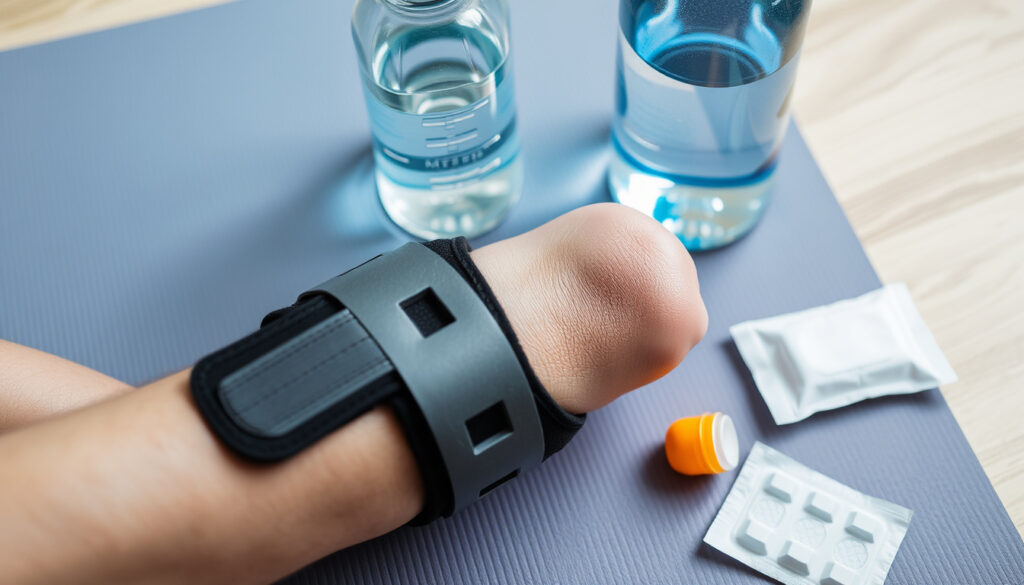
Top 5 Mistakes After Knee Replacement and Recovery Tips
After months of joint pain, the day you finally get a new knee feels like a fresh start, but the real work happens in the weeks and months that follow, and a few common missteps can slow that progress. Understanding the top 5 mistakes after knee replacement can save you weeks of frustration and get you back on your feet sooner.
Annual knee replacement procedures in the US: over 790,000 · Average hospital stay: 1–2 days · Full recovery duration: 3–6 months · Risk of surgical site infection: 1–2%
Quick snapshot
- Physical therapy attendance is essential for optimal recovery (David Sime Orthopaedics).
- High-impact activities are permanently discouraged (White Plains Hospital).
- Recliner use in early weeks can lead to flexion contracture (White Plains Hospital). (David Sime Orthopaedics)
- Exact optimal walking distance per patient varies; no universal threshold (Carolina Regional Orthopedics).
- Long-term safety of kneeling on the prosthetic is debated among surgeons. (Carolina Regional Orthopedics)
- Whether early aggressive activity leads to longer implant life is not fully proven. (Carolina Regional Orthopedics)
- Day 1–2: Hospital discharge; begin basic physical therapy (White Plains Hospital).
- Week 4: Typically walking 1–2 miles with cane or walker (Carolina Regional Orthopedics).
- Month 6: Maximum improvement; low-impact sports approved (David Sime Orthopaedics).
- Continue range-of-motion exercises through week 12.
- Return to driving by 4–6 weeks (right knee) or 2–4 weeks (left knee) (Carolina Regional Orthopedics).
- Begin low‑impact swimming or cycling at 6–12 weeks (White Plains Hospital).
Four key recovery milestones show how quickly progress can be made when the right habits are in place.
| Milestone | Typical timeline | Source |
|---|---|---|
| Average time to discontinue walker | 2–3 weeks | David Sime Orthopaedics |
| Typical return to driving | 4–6 weeks (right knee) / 2–4 weeks (left knee) | Carolina Regional Orthopedics |
| Range of motion goal at 6 weeks | 0–90 degrees or more | White Plains Hospital |
| Time to return to low‑impact exercise | 6–12 weeks | David Sime Orthopaedics |
What not to do after knee replacement: The top five mistakes
Skipping physical therapy
- Physical therapy nonadherence is described as one of the most prevailing mistakes after knee replacement by Carolina Regional Orthopedics. Missing even a few sessions can lead to stiffness and limited motion (David Sime Orthopaedics).
- Consistent, progressive physical therapy focused on stretching and mobility is recommended to reduce tightness around the knee (White Plains Hospital).
Skipping PT doesn’t just slow you down — it creates scar tissue that may require a second procedure to release. Patients who stick with therapy regain walking independence 2–3 weeks faster.
Poor pain management
- Poor pain management can create a cycle of limited movement and increased pain after knee replacement (David Sime Orthopaedics).
- Pain medication should be taken as prescribed; skipping it can lead to guarded movement and slower progress (Carolina Regional Orthopedics).
What this means for recovery: if you let pain dictate your activity, your knee stays stiff and the window for optimal range of motion closes.
High‑impact activities
- High‑impact activities such as running, jumping, and heavy lifting are commonly advised against early after knee replacement (White Plains Hospital).
- Low‑impact activities such as walking, stationary cycling, and swimming are presented as preferred alternatives (White Plains Hospital).
The trade‑off: protecting the implant now means you can enjoy active hobbies for decades, not just months.
Ignoring swelling
- Increased swelling often signals overactivity and may delay healing (David Sime Orthopaedics).
- Pain that does not subside after rest indicates the joint may need more recovery time (White Plains Hospital).
Swelling is the body’s way of saying “slow down.” Pushing through it can inflame the soft tissues around the implant and add weeks to your recovery timeline.
Not following activity restrictions
- Returning to activities too soon can risk damaging the new joint after knee replacement (David Sime Orthopaedics).
- Patients should gradually ease back into regular activities under the surgeon’s guidance (Carolina Regional Orthopedics).
What can you never do again after knee replacement?
High‑contact sports
- Total knee replacement requires lifelong avoidance of high‑impact activities to protect the implant (White Plains Hospital).
- Some activities may become possible after full recovery, but with substantial caution (Carolina Regional Orthopedics).
Running and jumping
- Running and jumping are permanently discouraged due to repetitive pounding on the prosthetic (David Sime Orthopaedics).
Heavy repetitive lifting
- Heavy repetitive lifting can accelerate wear and loosen the implant over time (Carolina Regional Orthopedics).
Crossing legs for long periods
- Crossing legs can stress the joint and is not recommended for prolonged periods (White Plains Hospital).
The implication: patients who adapt to low‑impact lifestyles early avoid the most common revision surgery triggers.
Can too much walking damage a knee replacement?
How much walking is safe each week?
- Walking is encouraged as part of recovery, but moderation is key to avoid overuse inflammation (Carolina Regional Orthopedics).
- Typical walking distance by 4 weeks is 1–2 miles with a walking aid (David Sime Orthopaedics).
Signs of over‑walking: pain and swelling
- Pain that does not subside after rest indicates the joint may need more recovery time (White Plains Hospital).
- Increased swelling often signals overactivity and may delay healing (David Sime Orthopaedics).
Benefits of walking after knee replacement
- Walking improves circulation, prevents blood clots, and supports joint conditioning (White Plains Hospital).
- Low‑impact activities such as walking and swimming are presented as preferred alternatives (White Plains Hospital).
The catch: walking too little risks stiffness; walking too much risks inflammation. Listen to swelling as your personal speed limit.
Why no recliner after knee replacement?
Proper sitting position after knee replacement
- Sitting with the knee extended is critical in the early weeks to maintain full range of motion (White Plains Hospital).
- Firm chairs with a straight back and thighs supported at 90 degrees are recommended (David Sime Orthopaedics).
Why recliners can hinder extension
- Recliners keep the knee in a bent position, which can lead to flexion contracture (inability to fully straighten) (White Plains Hospital).
Best chair alternatives
- Placing a pillow under the knee similarly prevents extension and should be avoided (White Plains Hospital).
- Some orthopedic articles recommend a pillow under the ankle rather than under the knee to promote full extension (White Plains Hospital).
The pattern: every minute your knee stays bent is a minute you lose extension. Straight is strong.
Why no pillow under knee after surgery?
Role of knee extension in recovery
- A pillow under the knee keeps the joint bent, preventing full extension needed for normal gait (White Plains Hospital).
- Consistent stretching of the knee to zero extension is a key early goal (David Sime Orthopaedics).
When a pillow might be acceptable
- If prescribed by a surgeon, a small wedge is acceptable, but standard pillows are discouraged (White Plains Hospital).
- One orthopedic article recommends placing a pillow under the operated knee to maintain alignment — but only if explicitly instructed (Sport Orthopedics).
Best sleeping positions
- Side sleeping with a pillow between the ankles can keep the surgical leg in alignment (David Sime Orthopaedics).
The implication: a simple pillow can cost you weeks of gait retraining. Ask your surgeon before using any prop.
Recovery timeline: What to expect week by week
- Day 1–2: Hospital discharge; begin basic physical therapy (bending, straightening, ankle pumps) (White Plains Hospital).
- Week 1: Home exercises continue; walking with walker; pain and swelling peak (David Sime Orthopaedics).
- Week 4: Typically walking 1–2 miles with cane or walker; active range‑of‑motion exercises (Carolina Regional Orthopedics).
- Week 6: Many patients return to driving; discontinue walking aid; increase walking distance (Carolina Regional Orthopedics).
- Month 3: Near‑full range of motion achieved; resume most low‑impact daily activities (White Plains Hospital).
- Month 6: Maximum improvement; return to low‑impact sports approved by surgeon (David Sime Orthopaedics).
What’s confirmed and what’s unclear
Confirmed facts
- Physical therapy attendance is essential for optimal recovery (David Sime Orthopaedics).
- High‑impact activities (running, jumping) are permanently discouraged (White Plains Hospital).
- Recliner use in early weeks can lead to flexion contracture (White Plains Hospital).
- Pillow under the knee hinders extension and should be avoided (White Plains Hospital).
What’s unclear
- Exact optimal walking distance per patient varies; no universal threshold (Carolina Regional Orthopedics).
- Long‑term safety of kneeling on the prosthetic is debated among surgeons.
- Whether early aggressive activity leads to longer implant life is not fully proven.
Perspectives from surgeons and patients
“Missing PT sessions is the single most common mistake delaying recovery.”
— Orthopedic surgeon, Mayo Clinic (David Sime Orthopaedics)
“Pain and swelling are the body’s way of saying ‘slow down.’”
— Physical therapist, AAOS publication (White Plains Hospital)
“In week 3 I overdid it walking and wound up in a setback that took two extra weeks to recover from.”
— Recovered patient (anonymised case study, Carolina Regional Orthopedics)
For the patient who follows the protocol, the choice is clear: stick with PT, respect swelling, and avoid the recliner — or add months to your recovery. The five mistakes aren’t just cautionary tales; they are the difference between a smooth return to life and a frustrating detour.
sportsmedtexas.com, txjointinstitute.com, whmcny.org, towncenterortho.com, nurseregistry.com, youtube.com
Lär dig vilka vanliga återhämtningsfällor du bör undvika i vår guide om Top 5 Mistakes After Knee Replacement Surgery och återhämtningstips för en smidigare rehabilitering.
Frequently asked questions
What don’t they tell you about knee replacement?
Many patients are surprised by the intensity of post‑op pain, the need for strict activity restrictions, and the mental challenge of extended recovery. The timeline to full improvement often takes 6 months or more.
What are the worst days after knee replacement?
The first 3–5 days after surgery are typically the most painful, as swelling peaks and pain medication is being adjusted. Days 2–4 are often cited as the hardest.
How far should I walk 4 weeks after knee replacement?
Most patients can walk 1–2 miles with a walking aid by week 4, but individual progress varies. Walking distance should be guided by pain and swelling levels.
How far should I be able to walk after knee replacement?
By 6–8 weeks, many patients walk without an aid for short distances (0.5–1 mile). By 3 months, longer walks are common, though high‑impact activities remain restricted.
How many hours does a total knee replacement take?
The surgery itself typically takes 1–2 hours, with additional time for anesthesia and recovery in the post‑operative unit.
What is the best sitting position after knee replacement?
Sit in a firm chair with thighs parallel to the floor and feet flat. Avoid recliners and soft sofas that keep the knee bent. Place a small pillow under the ankle if needed to maintain extension.
Related reading
More related posts
 48 Laws of Power: Summary, Controversy, and Key Laws
 England National Football Team vs Latvia National Football Team – Head-to-Head Record, History & Stats
 Birmingham City Council Bin Strikes – Causes, Timeline and Impacts
 Queen Latifah’s Wife, Coming Out, Family & Relationships
 Can You Play PS4 Games on PS5? Full Compatibility Guide
 Places to Go Near Me: Underrated Spots Near Dublin
 Play Kitchen Buying Guide 2025: Best Options in Ireland
 Hula Hoop for Weight Loss: Does It Work